Fly Fish Islamorada For Tarpon
Islamorada and the Upper Keys are the epicenter of the saltwater fly fishing universe and one of the best places on earth to pursue tarpon.
Islamorada has earned a reputation as one of the world's premier tarpon fisheries, and for good reason. Stretching from the Oceanside waters of the Upper Keys to Florida Bay and the Everglades backcountry, this diverse fishery provides opportunities to target tarpon in a variety of environments throughout the year. Resident fish are available in every season, when conditions are ideal, while each spring and early summer, large migratory tarpon transform the Oceanside into one of the most exciting places on earth to throw a fly.
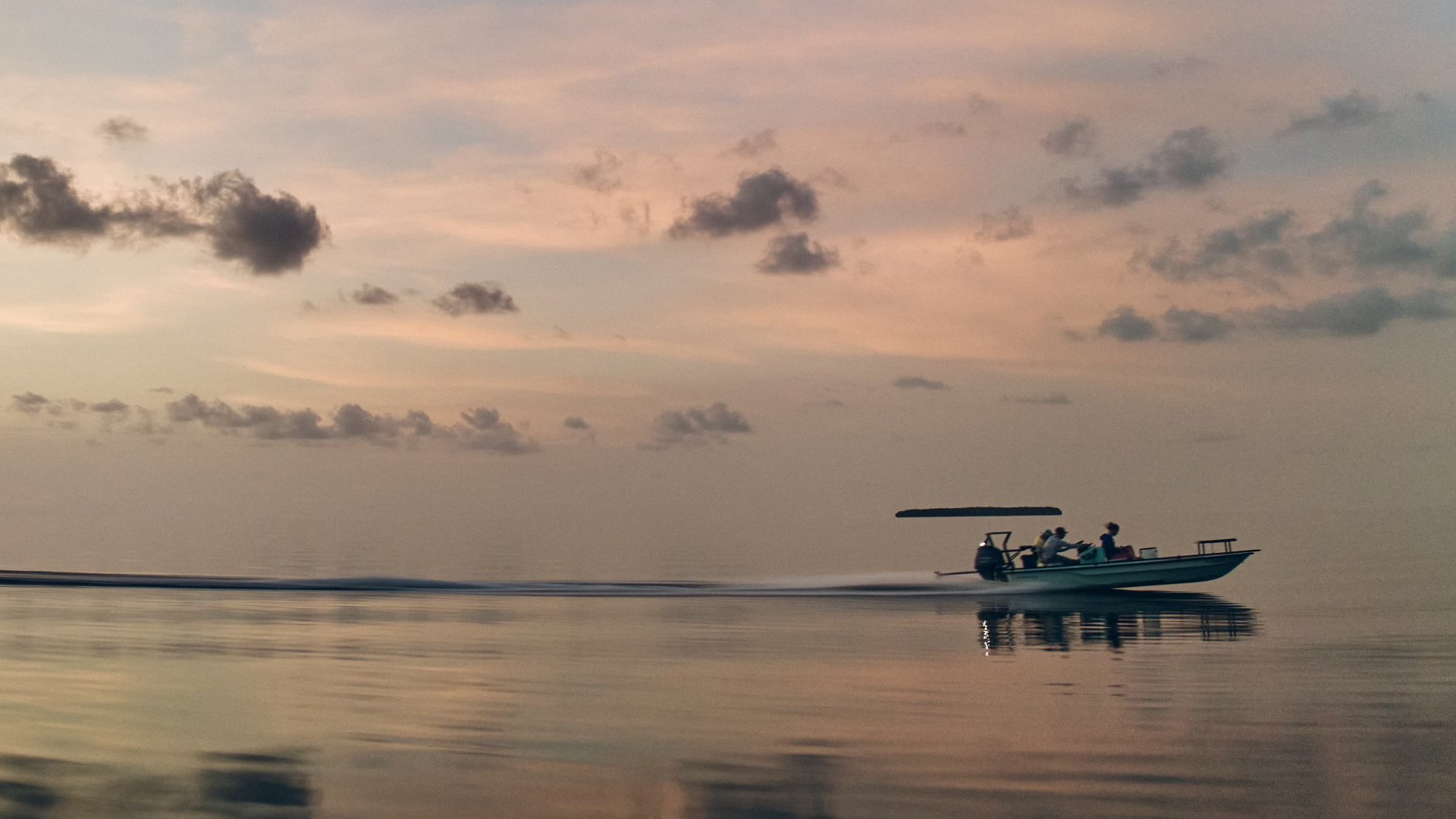
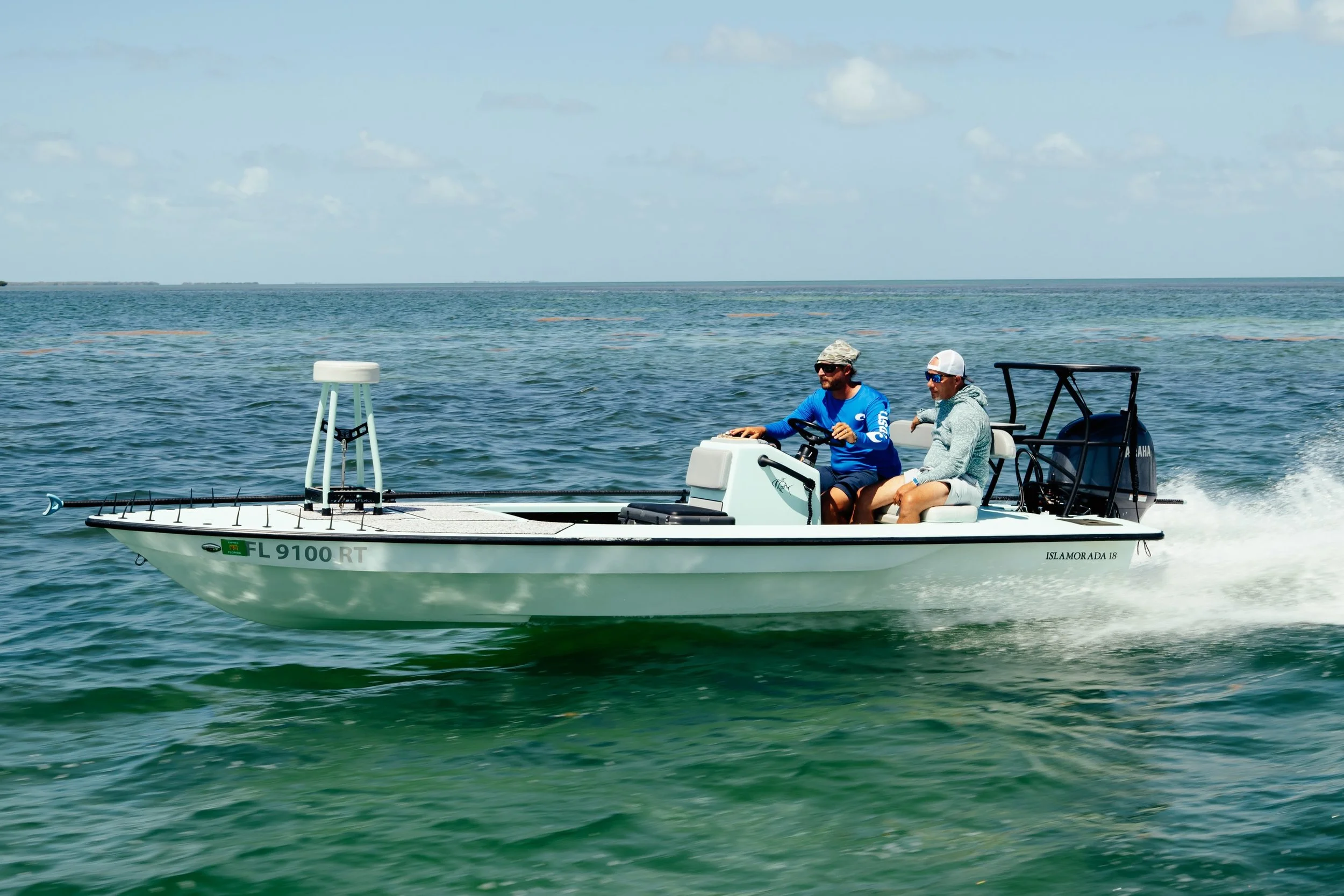
We fly fish for tarpon in shallow water from a technical poling skiff, looking for rolling fish, laid-up fish, and strings of migrating tarpon that have made Islamorada famous. Depending on the conditions, a day might begin in the backcountry before moving toward the Oceanside to intercept swimmers. Few places offer the opportunity to experience so many different styles of tarpon fishing without spending hours running between them.
Whether your goal is to watch your first tarpon eat a fly or to return each spring in search of migrating fish, fly fishing Islamorada offers one of the most complete tarpon experiences anywhere in the world.
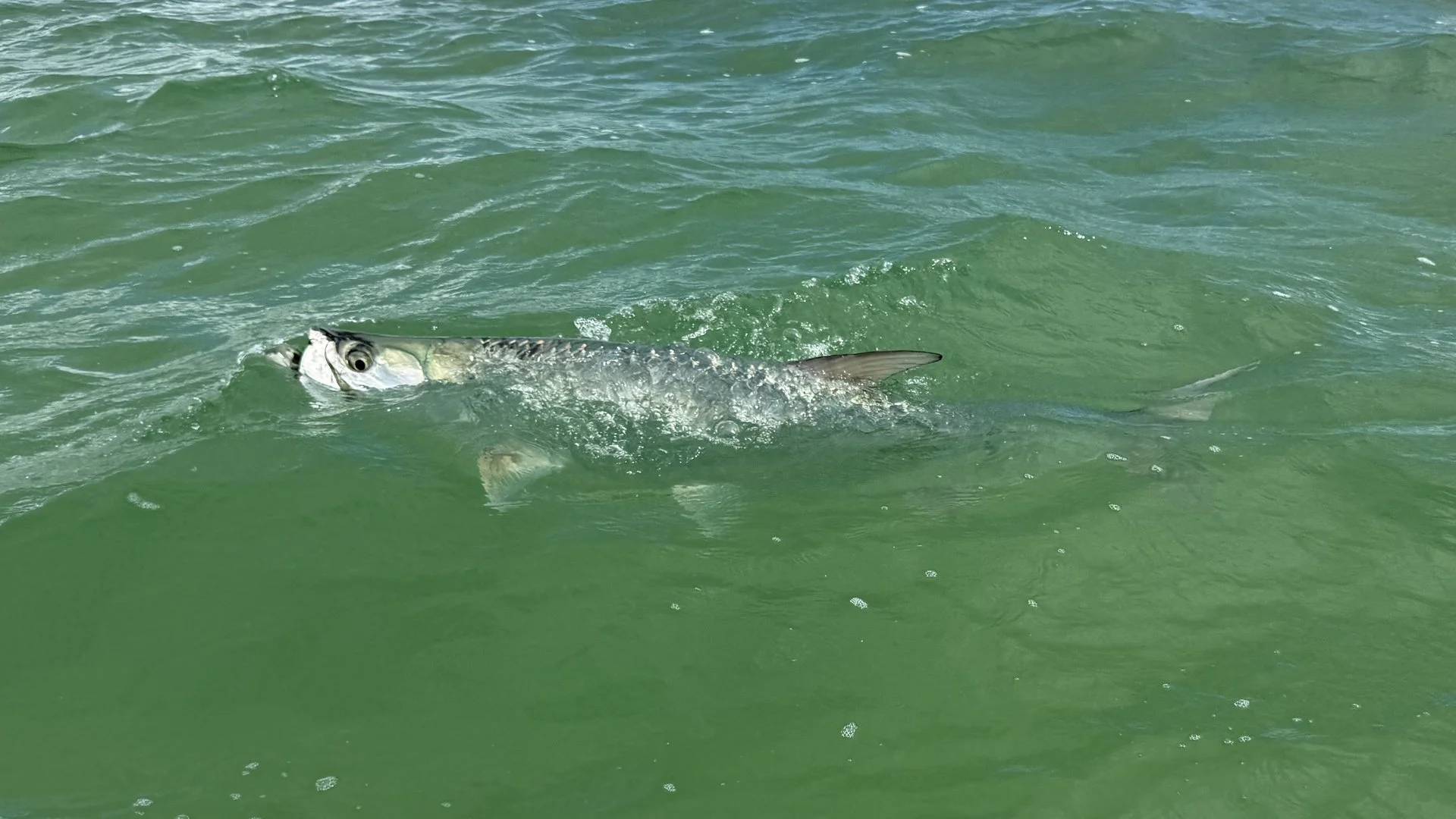
Tarpon Fly Fishing In Islamorada, FL
A day of tarpon fishing in Islamorada usually starts well before the sun rises. Depending on the season and the conditions, we may head into the Everglades backcountry looking for rolling resident fish or make a run toward the Oceanside to fish swimmers. Every morning begins with a plan, but that plan often evolves as the weather, tides, and fish dictate the day.
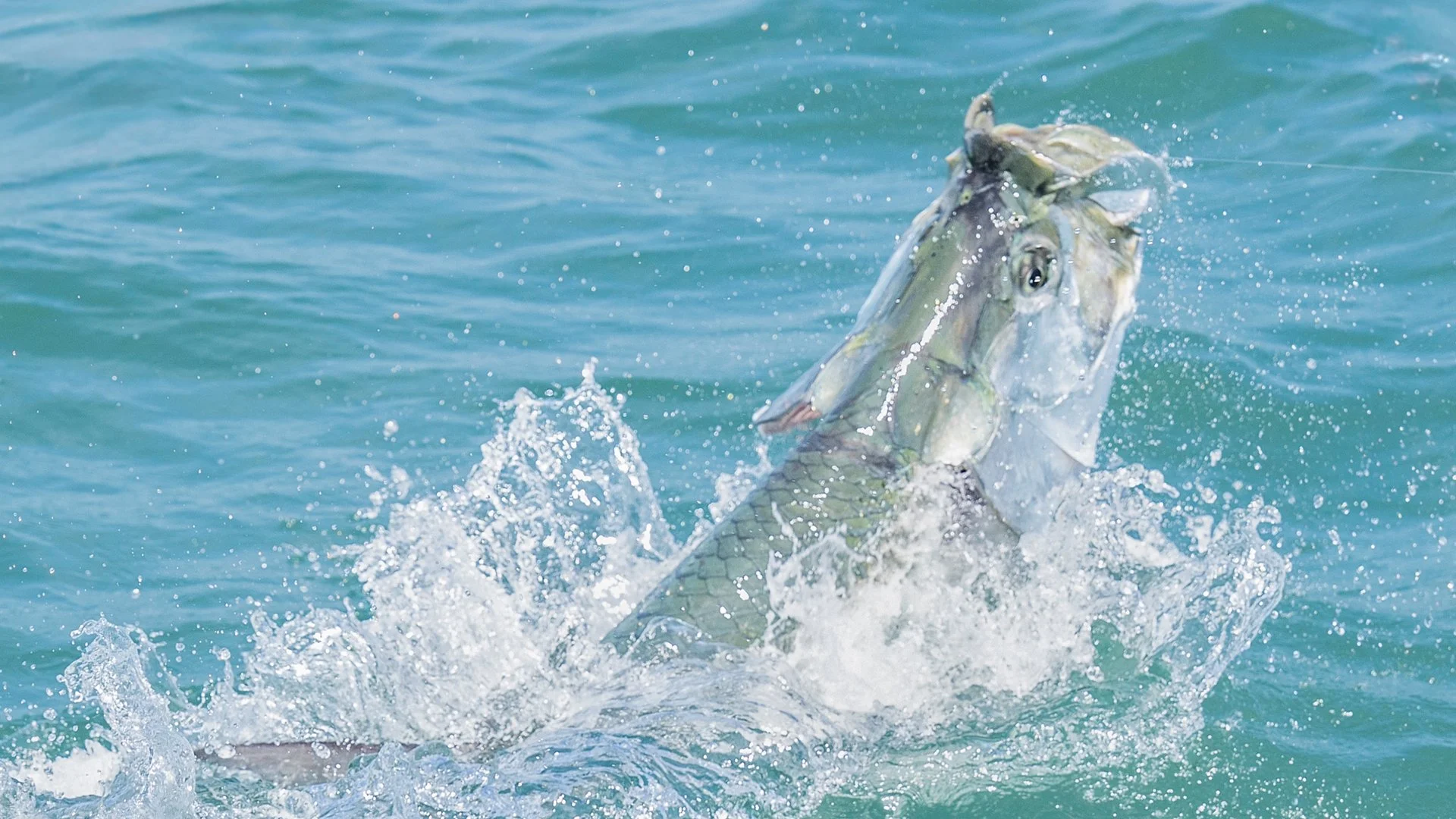
Fly fishing for tarpon is a game of patience while waiting for the right opportunity. Tarpon are usually active early in the morning doing tarpon things. They can be seen rolling, busting bait, and even free jumping out of the water. The calmer the wind, the more active they usually are, and the easier they are to spot from a distance. Shots can come at any distance, as we never quite know where the next one is going to roll. When they do, it is up to the angler to gauge direction and speed and get the fly a foot or two in front of the fish’s path as quickly and quietly as possible. A strip that naturally passes in front of the fish’s face usually gets its attention.
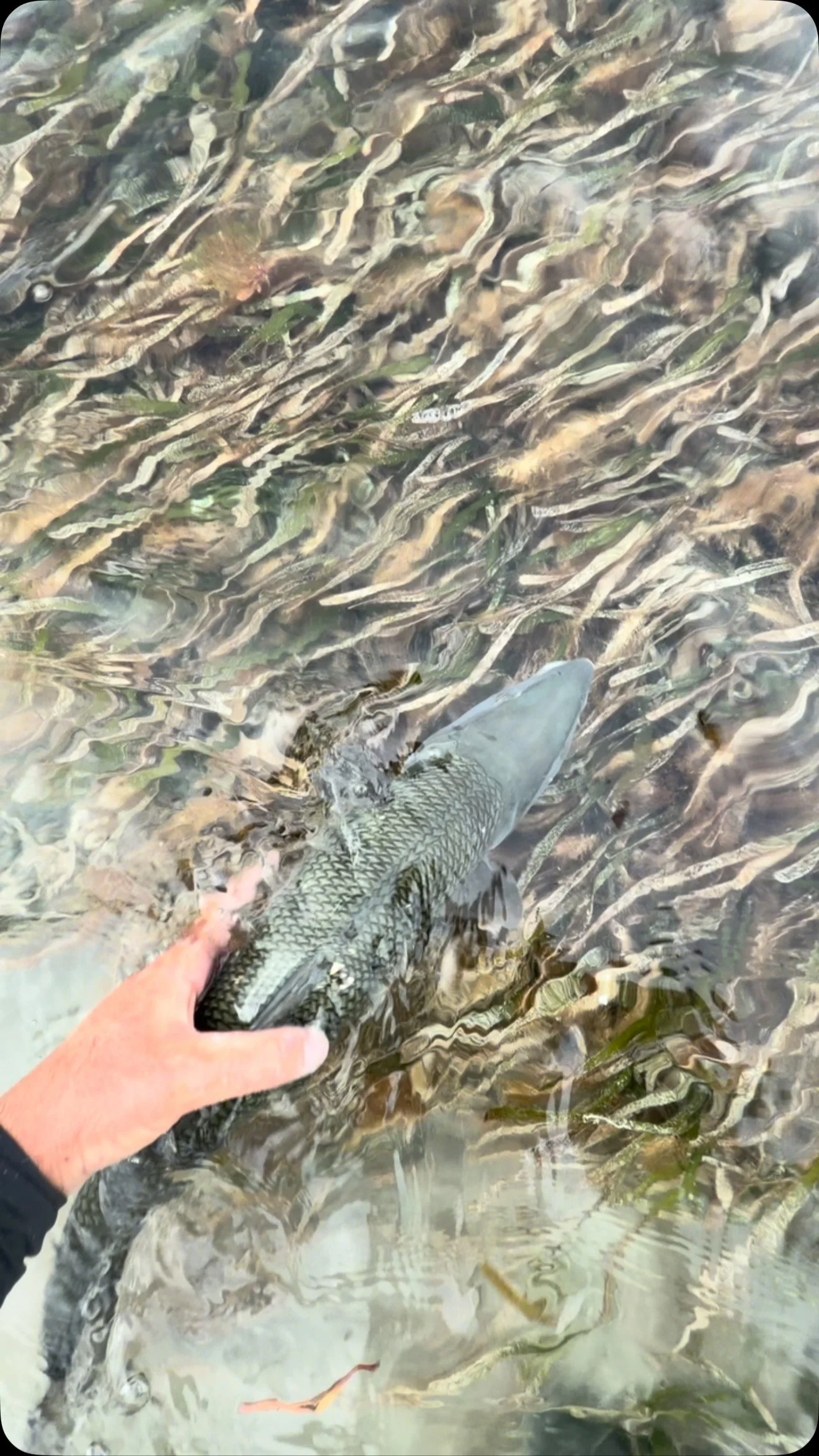
The most catchable tarpon are usually the ones closest to the surface. Tarpon will occasionally float motionless right under the surface, sometimes revealing themselves with a slow roll, some bubbles, or the exposed tip of their tail. As the sun rises enough to be able to see their bodies in the water, laid-up tarpon provide some of the shot making opportunities tarpon fly anglers dream of. These tarpon are resting, while actively ambush feeding. Shots placed near a tarpon’s business end and dragged slowly across their face stand a good chance of getting their attention. An interested tarpon will usually follow and bite a good presentation sometimes with a subtle sip and other times with an aggressive explosion.
When the sun is high and the morning activity in the backcountry has quieted down, the Oceanside provides a great place to spend some time looking for swimming fish. Tarpon use the edges of the Oceanside flats as travel routes on their annual migration. Tarpon actively swim these lines in groups, sometimes in excess of hundreds of fish. Fly fishing the Oceanside of Islamorada, Key Largo, and the Upper Keys is the pinnacle of technical tarpon fishing. These fish are migrating, and aren’t necessarily in feeding mode, but a small fly presented subtly right in front of a fish’s path can trigger a bite. Many tarpon fly fishing tournaments have been won on these Oceanside waters, and if seeing numbers of fish and testing your game is your thing, Islamorada is the place to do it.
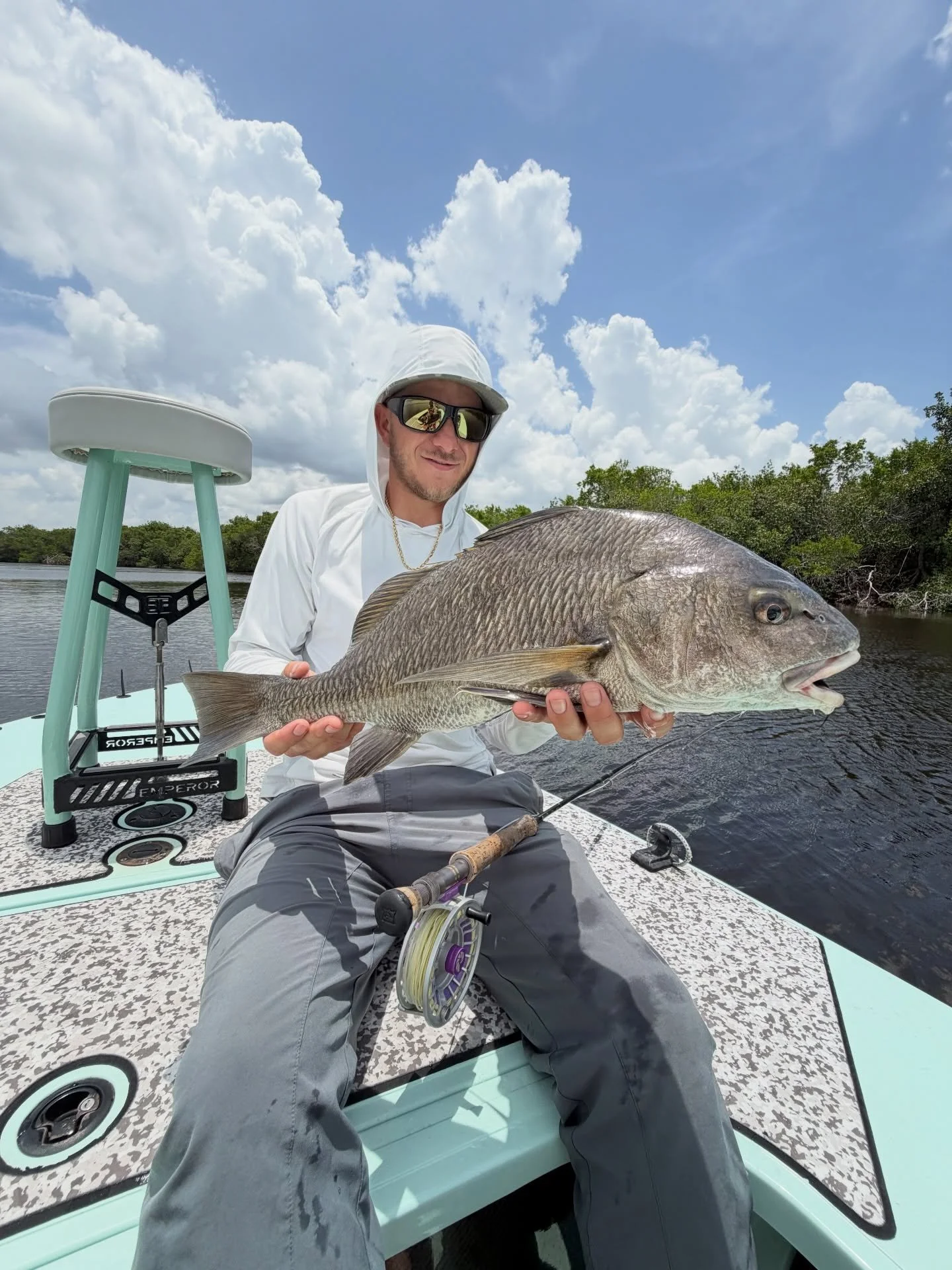
One of the things that makes Islamorada unique is that the day doesn't have to end if the tarpon aren't cooperating. Depending on the conditions, it isn't uncommon to mix up the day by moving onto the flats in search of permit or bonefish, or into the Everglades backcountry to target snook and redfish. Few places offer the opportunity to pursue so many world-class fly fishing species without spending hours running between them.
Islamorada Tarpon Fly Fishing Charter Details
Capt. Chandler Williams offers full day and half day Islamorada tarpon fly fishing trips and multiple boats are available for groups of more than 2 people. Contact us for current rates and availability. All trips include tackle/flies, fuel costs, launch fees, and a cooler with water and ice.
Payments And Deposits
Cash, Check or Venmo.
Credit cards through Venmo (additional service charges may occur)
$150 per day per guide deposit for all trips
Venmo or mail deposits to:
Chandler Williams
17A 12th Ave
Key West, FL 33040
What To Bring
Polarized sunglasses (amber, copper, and green lenses preferred)
Hat and any needed sun protection
9, 10, & 12 wt. rods (if own gear is preferred)
Quick drying clothing
Rain gear, jackets and pants
Shoes with non-marking soles
A positive attitude (most important part of having a successful trip)